What is Docker?
Docker is an open platform for developing, shipping, and running applications. Docker enables to separate the applications from infrastructure so that we can deliver software quickly. By taking advantage of Docker's methodologies for shipping, testing, and deploying code, you can significantly reduce the delay between writing code and running it in production.
Containerization#
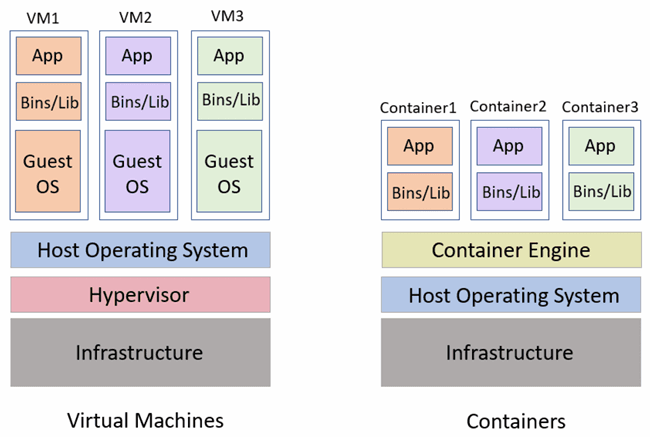
Docker works on a mechanism called containerization. It is a method of packaging an application with all its dependencies (libraries, configuration files, runtime) into a single, portable unit called container. These containers run consistently across environments, whether on a developer’s laptop, a test server or in production, without compatibility issues.
What problem does it solve?#
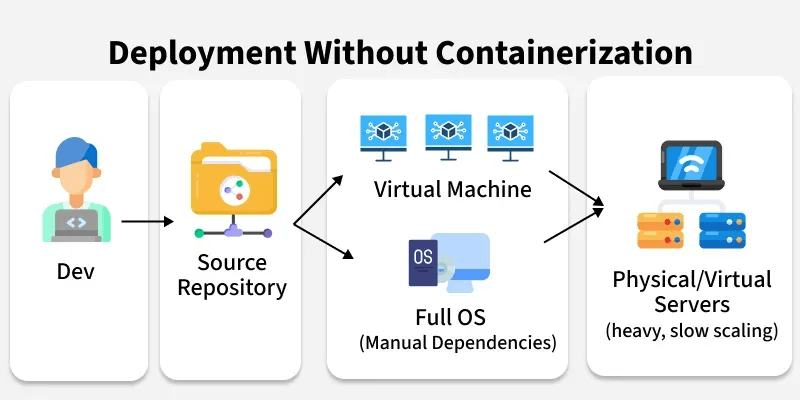
Earlier, applications were mostly monolithic, i.e., they were built as a single, large codebase combining the user interface, business logic, and database layers. Even a small change required rebuilding and redeploying the entire application.
To run these applications, organizations relied heavily on Virtual Machines (VMs), which leads to resource wastage, scaling issues, slow delivery and compatibility issue with different environment.
After Containerization
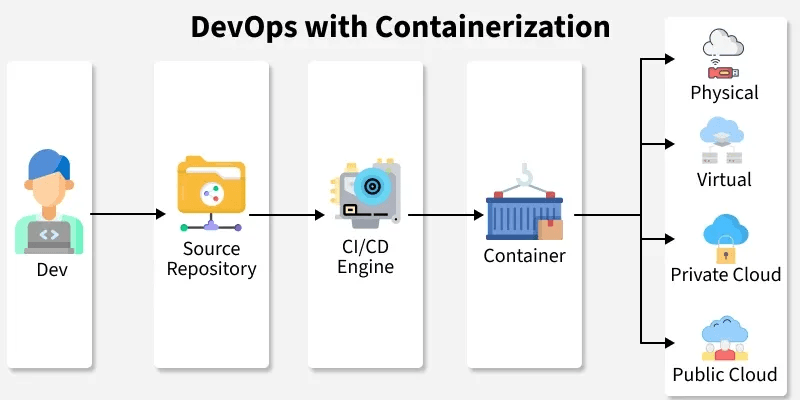
With containerization, applications no longer needed heavy Virtual Machines for isolation. Instead, they could run inside lightweight containers that package the application and all its dependencies together. It gives the flexibility to write once, run anywhere, consistency, microservice-friendly, faster scaling and deployment and supports modern CI/CD pipeline.
Conclusion#
Docker transforms the way applications are built and deployed by introducing containerization. Instead of relying on heavy virtual machines, Docker uses lightweight containers to package applications with all their dependencies, ensuring consistency across environments. This approach improves scalability, accelerates delivery, reduces infrastructure overhead, and seamlessly supports modern microservices and CI/CD practices.